Bodybuilding
Bodybuilding is a popular sport, but still a little bit of a sub-culture. Bodybuilding consists of the continued use of weights and the progressive increasing of those weights on the muscle in their workout. The aim is to increase the size of those muscles by means on hypertrophy, with a focus on the aesthetics of the muscle and the overall body.
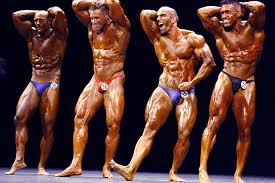
Because the focus is on the aesthetics and looks of the body and the musculature system it differs quite a bit from power-lifting which I will discuss in just a few moments.
Bodybuilding is a fascinating sport and lifestyle focused on developing muscular strength, size, and definition through structured exercise, nutrition, and supplementation. It’s not just about lifting weights; it’s also about sculpting the body into a desired shape through targeted training and diet.
Bodybuilders typically follow rigorous workout routines that involve lifting heavy weights to stimulate muscle growth and performing specific exercises to isolate and develop individual muscle groups. These routines often target different muscle groups on different days to allow for adequate recovery time.
Competitive bodybuilding involves showcasing one’s physique in competitions judged on criteria such as muscle size, symmetry, definition, and overall presentation. Bodybuilders go through intense training and dieting phases to prepare for these competitions, often manipulating factors like water intake and sodium levels to achieve peak condition on the day of the event.
Overall, bodybuilding requires dedication, discipline, and perseverance, but it can also be incredibly rewarding, both physically and mentally, as individuals work towards sculpting their ideal physique.
How To Start Bodybuilding
Bodybuilding can be a very challenging sport, but it can also be very rewarding. When getting started in this sport there are a few things to keep in mind.
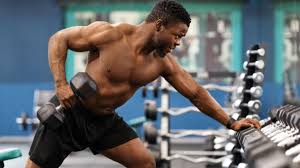
You must first set clear and achievable goals. When you set a goal it will help you progress because you have a way of monitoring your progress. Your first goals will be to improve your general health and fitness and start developing your strength.
You should educate yourself as much as possible. There are a lot of great books, websites and YouTube channels with the information and knowledge that you’ll need to get yourself on track to bodybuilding success.
When starting out you should first start with the basics. You should start with the most often used compound exercises that target groups of muscles. Such exercises like the squat, bench-press and deadlift are good starting points.
You should start a program and a regular routine. The staff of you local gym will be able to help you with this, remember that’s what they are there for. Aim to train the main muscle groups 2 -3 times per week with a good level of rest between each time. Over time you can increase the load and intensity of the work-outs.
Remember that form and technique with your exercises is very important. Good form and technique will help you target the muscles more effectively and will help avoid injury.
Nutrition and diet is of paramount importance. What you eat is what fuels your body and you are what you eat. You’ll need a diet which is rich in lean proteins, complex carbohydrates and healthy fats. You should eat plenty of fruits and vegetables too.
Remember consistency is really important. Building you muscle is a long term process and it take a lot of patience and dedication. You can track you progress over time to help you stay motivated.
Bodybuilding – A Brief History
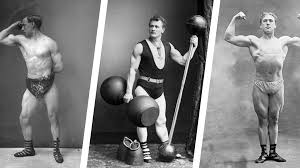
Eugene Sandow is seen as “The Father of Modern Bodybuilding”. He developed it in the late 19th century. Sandow used to put on “muscle display shows” whereby he would display his body to an audience. This was the precursor of a modern bodybuilding competition.
The 1970’s is seen as the Golden Era of bodybuilding with such greats as Arnold Schwarzenegger, Franco Columbo, Lou Ferrigno and others dominating the bodybuilding scene.
In 1977 the documentary “Pumping Iron” featuring Arnold Schwarzenegger was released which helped bring publicity to bodybuilding, helped bring the sport of bodybuilding to a larger audience and also helped Arnolds acting career.
The 2000s were dominated by such people as Ronnie Coleman and the development of “Mass Monsters” like Markus Ruhl.
Types of Bodybuilding
There are a number of different kinds of bodybuilding with the main categories being as follows:
- Professional Bodybuilding
- Natural Bodybuilding
- Men’s Physique
- Classic Physique
- Female Bodybuilding
Professional Bodybuilding
Professional bodybuilding is what we think of when we think of bodybuilding stars like Arnold Schwarzenegger. This is the kind of bodybuilding that gets the most attention with huge competitions like Mr Olympia which is the highest accolade in the sport of bodybuilding
Natural Bodybuilding
Natural bodybuilding refers to bodybuilding without the use of performance enhancing drugs, hormones or steroids, although they may use natural supplements.
Natural bodybuilders rely on effective training, nutrition and supplementation for their gains. They emphasize health, integrity and longevity.
Men’s Physique
Men’s physique competitions have gained popularity in recent years and focus on a more athletic and streamlined look compared to traditional bodybuilding. Competitors in men’s physique contests showcase muscularity with less emphasis on extreme muscle size or conditioning. This category often emphasizes a V-tapered upper body and well-defined abs.
Classic Physique
This style emphasizes symmetry, proportion, and aesthetics, drawing inspiration from the physiques of bodybuilders from the 1970s and earlier. Classical bodybuilders aim to develop a balanced and harmonious physique with well-defined muscles and classic lines.
Female Bodybuilding
Similar to men’s physique, women’s physique competitions prioritize a toned and athletic appearance with a focus on muscle development and symmetry. Women’s physique competitors typically display a balance between muscle size and femininity, with less emphasis on extreme muscularity compared to bodybuilding.
The Difference Between Natural and Open Bodybuilding
Psychologically, Physiologically and culturally open bodybuilding and natural bodybuilding are very different from each other.
The Limiting Factor
Open bodybuilding is known for the use of things like steroids and growth hormone. With this kind of support their recovery is artificially extended, their protein synthesis stays elevated. In Open they really push their bodies to the limit. This ends up putting a lot of stress on the organs, it can increase blood pressure and cause psychological burnout.
With Natural Bodybuilding they do things without drugs and any supplements they take are just natural supplements. Without drugs they may take longer to recover, they understand how the correct calorie intake and quality of sleep affects their bodies.
The Rate of Progress
With Open bodybuilding the rate of progress is much higher than that of Natural. With the drugs and gear involved there may be noticeable progress in as little a period of time as a few weeks. Body parts change visibly, lagging areas can be force-fed growth.
With Natural bodybuilding progress can take months, meaningful muscle gain can take years.
Training Style
The training style between open bodybuilding and natural bodybuilding is very different. With Open bodybuilding the aim of training is stimulus accumulation. Because the recovery is pharmacologically supported they can have a higher volume, they can use high-intensity techniques, their muscles can be hit hard and frequently and failure is less risky.
With natural bodybuilding the recovery is much more limited. They must control their volume and they must moderate their frequency.
Conditioning and Stage Look
Natural bodybuilders look very different on stage than Open does. Open bodybuilding is much more extreme with some of the elite bodybuilders being called “Mass Monsters”. The key traits of open bodybuilding is muscle “hardness”, near-zero subcutaneous water that gives the razor sharp separation and extreme vascularity.
Natural bodybuilding is much softer, there is a focus on symmetry, proportion and clarity.
Power-lifting
Power-lifting is a strength sport. It differs from bodybuilding in that the focus is not on the aesthetics, but it is on strength.
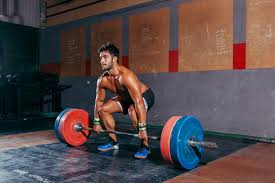
The three main lifts in power-lifting are the squat, the bench press and the deadlift and a contestant competes with a barbell loaded with disc weights.
Power-lifting is an Olympic sport and it has competitions all around the world. There are a lot of famous strong men such as Eddy Hall and Tom Stoltman.
The training for power-lifting is intensive and it takes a lot of commitment and consistency to get to the level of the top power-lifters.
Power-lifters focus on weight training to improve their performance in the three main lifts of power-lifting; the squat, the bench press and the deadlift.
Power-lifters also train with aerobics to improve their endurance during drawn-out competitions and also helps them in recovery from their weight training sessions.
Bodybuilding Versus Power-lifting
Both bodybuilding and power-lifting are sports that involve lifting weights to build muscle, but they have different goals, training methodologies and competitions.
Goals
Bodybuilding mostly focuses on aesthetics. It is concerned with developing muscle size, symmetry and definition. To create a physique that is aesthetically pleasing. The sport focuses on appearance over strength.
Power-lifting is a sport that involves developing strength. Power-lifting revolves around three main lifts; the squat, the benchpress and the deadlift. Power-lifters aim to improve their performance on these exercises and the primary focus is on strength rather than aesthetics.
Training Methodology
When bodybuilders train they utilize high-volume sets with repetitions that are targeting certain body parts with the aim of growing and developing that specific body part. Bodybuilders are aiming to maximize muscle hypertrophy with the aim of developing individual particular muscles.
Power-lifting training mostly centers around lower-rep, higher-weight training methodology to build maximum strength in the squat, bench press, and deadlift. Power-lifters prioritize lifting heavier weights with proper form and technique to improve their performance in these specific lifts.
Competition Formats
Bodybuilding competitions are centered around aesthetics whereby the contestant displays their physique to a panel of judges through a series of poses who then score them on such factors as overall aesthetic, muscle mass, symmetry and definition. This make bodybuilding quite a subjective sport.
Power-lifting competitions involve lifting the heaviest weights possible in the squat, deadlift and benchpress. In competition the lifter gets three attempts at each lift and the heaviest lift in each lift are totaled for a final score.
Competitors are then ranked on their total weight lifted in their weight category.
Although there are some overlaps and similarity between bodybuilding and power-lifting they are actually different sports.
Although a lot of athletes may practice both sports they may eventually specialize to focus on the sport of their choice.
The Psychology of Bodybuilding
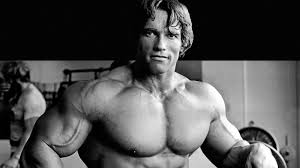
Bodybuilding is not just physical; there are a lot of psychological factors involved.
Control & Stress Relief
A big draw for people to the world of bodybuilding is being in control. A lot of people deal with stresses from everyday life, or a loss of structure. Bodybuilding becomes a place where there is predictability and where the individual also feels like they are in control.
Self-Esteem & Identity
Improving self-worth and personal identity is also a big draw to bodybuilding. People just like it when the reflection in the mirror looks great or when they feel confident on the beach during beach season.
Bodybuilding also build identity for people. It becomes less something you only do in a gym; it becomes an entire lifestyle.
Commitment & Being Goal-Oriented
Bodybuilding takes commitment and consistency as results show in the long-term after a lot of hard work.
Bodybuilding may also give people the experience of being goal oriented and having the feeling of accomplishment when goals are reached. When goals are reached the individual may then set new goals to aim for in a positive cycle of continuous improvement and transformation.
The habit of being goal-oriented it something that can be transferred to other aspects of the individuals life, either personally or professionally.
The Reward Loop
Bodybuilding hits a number of dopamine triggers. Dopamine is a brain chemical known as “the pleasure hormone”.
Bodybuilding can get someone into a positive cycle; when they start making visible progress they will be encouraged to work further, they will be encouraged to set new goals. They may feel the endorphins of a great work-out which will make them want to repeat it and continue on their progress.
Mental Stamina Needed for Bodybuilding
Bodybuilding training has a huge psychology factor, a lot of mental stamina and endurance is needed. It is really a mental endurance sport.
There may be a tolerance from monotony; doing the same kind of thing over the long-term is not very exciting. Bodybuilding demands the ability to stay engaged and motivated.
There is also a delayed gratification factor. Progress can be slow, subtle and not immediately visible. Bodybuilders put in brutal effort for results that they don’t see right away. This requires faith in the process, emotional regulation and a lot of motivation and stamina.
There may be some social isolation with bodybuilding; bodybuilders sacrifice nights out and their social lives. Mental stamina means being okay with being slightly out of sync with normal life without becoming antisocial or resentful.
Bodybuilders have to have a long-term mindset. Real progress in the sport is measured n years and results are not immediate. Bodybuilders have to be patient, motivated and have the ability to overcome negativity and any kind of self-doubt.
Bodybuilding & Long-Term Health
This topic will be of interest to those who plan to keep a fit healthy body all their life, well into their 60’s, 70’s and even beyond.
Muscle Mass & Longevity
Generally speaking, having a good muscle mass is a predictor of living a long life and still being independent in old age.
Muscle is not just for lifting heavy weights or looking “ripped”, it is a metabolic organ that helps you in a multitude of ways.
Studies show that higher muscle mass and strength are linked to lower all-cause mortality, even when fat is taken into account. This is a very important factor, it is just as important as BMI.
Metabolic & Hormonal Benefits
The body’s muscle mass is a very important metabolic organ. Muscle is the main place where your body stores and uses glucose, so the more muscle mass you have the better insulin sensitivity you’ll have and having less muscle can increase the risk of Type 2 diabetes.
This is very significant for longevity, because diabetes will accelerate aging of blood vessels, nerves, the kidneys and the brain.
Independence at an Old Age
A good and strong muscle mass helps people keep their independence and their mobility as they age.
A lot of aging people can get themselves into a negative spiral of decline; as people age they lose their muscle mass, they become weaker which can result in falls, These falls can lead to fractures, these fractures lead to immobility, and this immobility leads to rapid decline and to higher mortality.
Maintaining good muscle mass can keep the individual out of this negative spiral.
Actually, the loos of muscle mass when aging could be sarcopenia, age related muscle loss, this is a medical condition, and not just “getting old”.
Muscle helps people stay independent at old age because it helps with basic life tasks. A lot of daily tasks take strength, like getting up from the toilet or chair and walking some distance.
It’s Good for The Brain Too
Strength training has been shown to be associated with better executive function, slower cognitive decline and lower risk of dementia.
This is because strength training improves blood flow to the brain and better glucose regulation in the brain.
Muscle really does affect your brain. When the muscles in you body contract they release signalling molecules called myokines. These travel through the blood and get to the brain. BDNF (Brain-Derived Neurotrophic Factor) is a Nerve Growth Factor (NGF) that’s found in the brain. It promotes neurogenis, which is the growth of new cells. It also strengthens synapses and protects neurons from degeneration
How much muscle is enough?
You don’t need to be a huge bodybuilder or powerlifter to have all of the benefits of strength training.
Some good habits would be 2-3 resistance sessions per week, you should focus on big body movements like squats, you should aim for increasing strength over the long term, and make sure you have protein in your diet.
The Future of Bodybuilding
Arnold Schwarzenegger is known to have said that the sport of bodybuilding is at a crossroads regarding its future.
He has said that the sport could “Go through the roof” and be accepted by the public in a huge way, maybe even becoming an Olympic sport, or it could regress and become less popular.
The Sport May be Split
We are already seeing the sport become split somewhat, however it is something that could become much more pronounced.
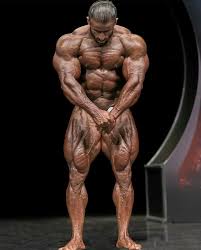
An example of this is the contrast between “Mass Monster” Open Bodybuilding, and classic physique.
Bodybuilding could stop being one thing and it could multiple subcultures with different values.
People will Prioritize their Health
A lot of bodybuilders, especially the “Mass Monsters” of open bodybuilding are known for taking “gear” including steroids, testosterone and growth hormone.
A regretful example of this is Rich Piana, who, sadly, died a few years ago at the young age of 46 after heavy steroid abuse.
Some bodybuilders use steroids to accelerate muscle growth and recovery in a way far beyond normal, natural limits. With a reduced recovery time bodybuilders can train more frequently and more intensely. Studies suggest that elite bodybuilding is highly associated with steroid use.
Bodybuilders may take hormones like testosterone. High testosterone levels improve muscle mass, recovery and training intensity.
Bodybuilders and athletes sometimes use recombinant human growth hormone (HGH) to enhance muscle size and recovery. Unlike testosterone, GH doesn’t directly increase strength but promotes lean tissue growth and fat loss.
A lot of bodybuilders are now very health conscious and want to avoid these kinds of enhancers and to remain natural.
Bodybuilding Will Become Technology Driven
Bodybuilding has been rapidly becoming more technology-driven, and it’s transforming almost every aspect of the sport—from training to nutrition to performance tracking.
People can have wearable technology like smartwatches and fitness trackers to track their heart rate, calories being burnt, and sleep and recovery. This kind of wearable technology optimizes their training intensity and helps prevent over-training.
AI driven technology and apps can analyse performance and give usable feedback to the user.
Technology can be used for nutrition and supplement optimization. People can get personalized diets based on genetic pre-dispositions for metabolism, fat storage and nutrient absorption.
Recovery and regeneration technology includes cryotherapy and infrared saunas to reduce inflammation and increase recovery, and sleep trackers to optimize recovery phases.
Bodybuilding is no longer just about brute strength and aesthetics—it’s becoming science-driven, precision-optimized, and highly measurable.
The pros of this is that there is faster progress, injury reduction and more personalized training.
The cons of this may be the over-reliance on technology, privacy concerns, and that the “human feel” of training diminishing.
Classic Physique Becoming More Popular
Classic physique is not just another contest division, it is quickly becoming the most popular part of the entire sport.
A lot of people believe that Open Bodybuilding has lost it’s popularity a long time ago. To a lot of people the open division looks alien, unhealthy, unattainable and maybe even a little freaky. Also, a lot of bodybuilders want to stay natural avoiding steroids, Testosterone and growth hormones.
In contrast to open bodybuilding, classic physique is seen as more aesthetic than open, because open may seem a little too extreme and also they want to avoid the “bubble-gut” that growth hormones can cause.
Classic physique values a kind of aesthetic where the competitors don’t just try to attain absolute size; classic physique shows visible structure, flowing lines, and poses that actually matter.
A lot of athletes pursue classic physique because it’s healthier, it allows better health management, and there are less drugs involved.
Some Useful Links
https://en.wikipedia.org/wiki/Bodybuilding
https://www.menshealth.com/fitness/a19548591/new-bodybuilding-rules/
https://www.merriam-webster.com/dictionary/bodybuilding
https://www.muscleandfitness.com/workouts/workout-tips/getting-started-bodybuilding
https://bayesianbodybuilding.com/articles/
https://www.t-nation.com/all-articles/tags/bodybuilding
https://rippedbody.com/novice-bodybuilding-program/
https://www.lifehack.org/articles/lifestyle/15-bodybuilding-tips-for-beginners.html